What I can do for your organization
Developing proactive talent strategies that reduce time-to-hire and boost retention for tech and mission-driven organizations
To learn more about what I have done and what I can do for you, click here!
Listen to my guest appearance on StaffGeek’s People Analytics podcast where we discussed changing the workplace mindset!
We lived through the Great Resignation - read my interview with Medium about it and the Future of Work.
Areas of Expertise
-
![Wooden chess pieces on a chessboard, with a blurred background.]()
Talent Acquisition
I build talent acquisition functions that are aligned to the business, not just hiring volume. Throughout my career, I’ve partnered closely with executive leadership to understand where the organization is headed, what capabilities are needed to get there, and how to build recruiting strategies that support long-term growth and operational success.
My approach is both strategic and hands-on. I focus on creating scalable recruiting processes, strengthening employer brand and candidate experience, and using data to drive smarter hiring decisions. I’ve led hiring efforts across high-growth, transformation, and multi-entity environments, helping organizations identify critical skill gaps, attract top talent, and retain the people needed to execute the business strategy.
-
![Person wearing sunglasses holding a fan of hundred-dollar bills.]()
Total Rewards
I build total rewards strategies that balance employee experience with business performance. Throughout my career, I’ve developed compensation, benefits, recognition, and performance programs that not only help attract and retain talent, but also reinforce culture, drive engagement, and support organizational growth.
My approach is grounded in understanding both the workforce and the business. I partner with leadership to align total rewards with company goals, benchmark programs against the market, and ensure employees understand the value of what’s being offered through transparency and thoughtful communication. I’ve led initiatives involving compensation structures, incentive programs, retirement and benefits strategy, performance management, and organizational change in both high-growth and transformational environments.
I believe effective total rewards programs have to evolve alongside the business. That means continuously evaluating what is working, identifying gaps, responding to workforce trends, and building programs that are equitable, competitive, and scalable over time.
-
![Group of five young people laughing and working together at a table with laptops inside a library.]()
Employee Engagement
I build employee engagement strategies that go beyond surveys and events and focus on creating cultures where employees feel connected, heard, and invested in the success of the organization. Throughout my career, I’ve worked closely with leadership teams to strengthen engagement during periods of growth, transformation, organizational change, and operational pressure.
My approach starts with listening and understanding the employee experience through feedback, data, manager insights, and direct communication. From there, I focus on building clear communication channels, increasing leadership visibility and accountability, and creating programs and practices that reinforce trust, collaboration, inclusion, and alignment with company values.
I believe engagement is directly tied to business performance. Employees are more engaged when they understand the mission, feel valued for their contributions, see opportunities for growth, and trust leadership to communicate openly and consistently. That’s why I continuously evaluate engagement strategies through feedback, retention trends, performance outcomes, and organizational data to ensure they remain effective and evolve alongside the needs of the business and workforce.
-
![Two women having a discussion at a conference table, one holding a tablet, with a brick wall in the background.]()
Employee Relations
I take a pragmatic and people-centered approach to employee relations, understanding that navigating complex human dynamics requires both empathy and the willingness to address difficult issues directly and consistently. Throughout my career, I’ve partnered with leaders across all levels of the organization to foster workplace cultures built on accountability, transparency, fairness, and respect.
My approach to employee relations focuses on creating environments where employees feel heard, managers are equipped to lead effectively, and issues are addressed early before they escalate into larger organizational challenges. I believe strong employee relations is not just about resolving conflict, but about building trust, reinforcing culture, and ensuring consistency in how people are treated across the organization.
I’ve led employee relations strategies through periods of rapid growth, operational transformation, organizational restructuring, and change management. This includes coaching leaders through difficult conversations, conducting sensitive investigations, strengthening performance management practices, improving communication channels, and ensuring compliance while maintaining a human approach. When done well, employee relations becomes a key driver of engagement, retention, productivity, and overall organizational health.
-
![Name tags with handwritten names and numbers, decorated with blue and black dragonfly illustrations, arranged on a wooden surface, with a pen nearby.]()
Organizational Leadership and Development
I approach organizational development, performance management, and succession planning as interconnected parts of building a sustainable, high-performing organization. Throughout my career, I’ve helped organizations strengthen leadership capability, improve accountability, and create scalable people practices that support long-term business growth and operational stability.
My approach starts with aligning talent strategy to business strategy. I work closely with leadership teams to identify organizational gaps, define the capabilities needed for future growth, and build development frameworks that support both individual performance and broader organizational objectives. This includes leadership development, coaching, mentorship, organizational design, and creating cultures that encourage continuous improvement, innovation, and accountability.
From a performance management perspective, I believe the process should drive clarity, alignment, and growth rather than simply serve as an annual administrative exercise. I’ve implemented performance frameworks centered on clear expectations, measurable goals, regular feedback, talent calibration, and manager accountability, helping organizations strengthen performance while improving employee engagement and development outcomes.
Succession planning is equally critical, particularly in fast-growing or transformational environments where organizational continuity matters. I’ve partnered with executive teams to identify high-potential talent, assess leadership readiness, and build succession strategies for critical roles across the business. By integrating organizational development, performance management, and succession planning into a cohesive strategy, I help organizations strengthen leadership pipelines, increase agility, and position themselves for sustainable long-term success.
-
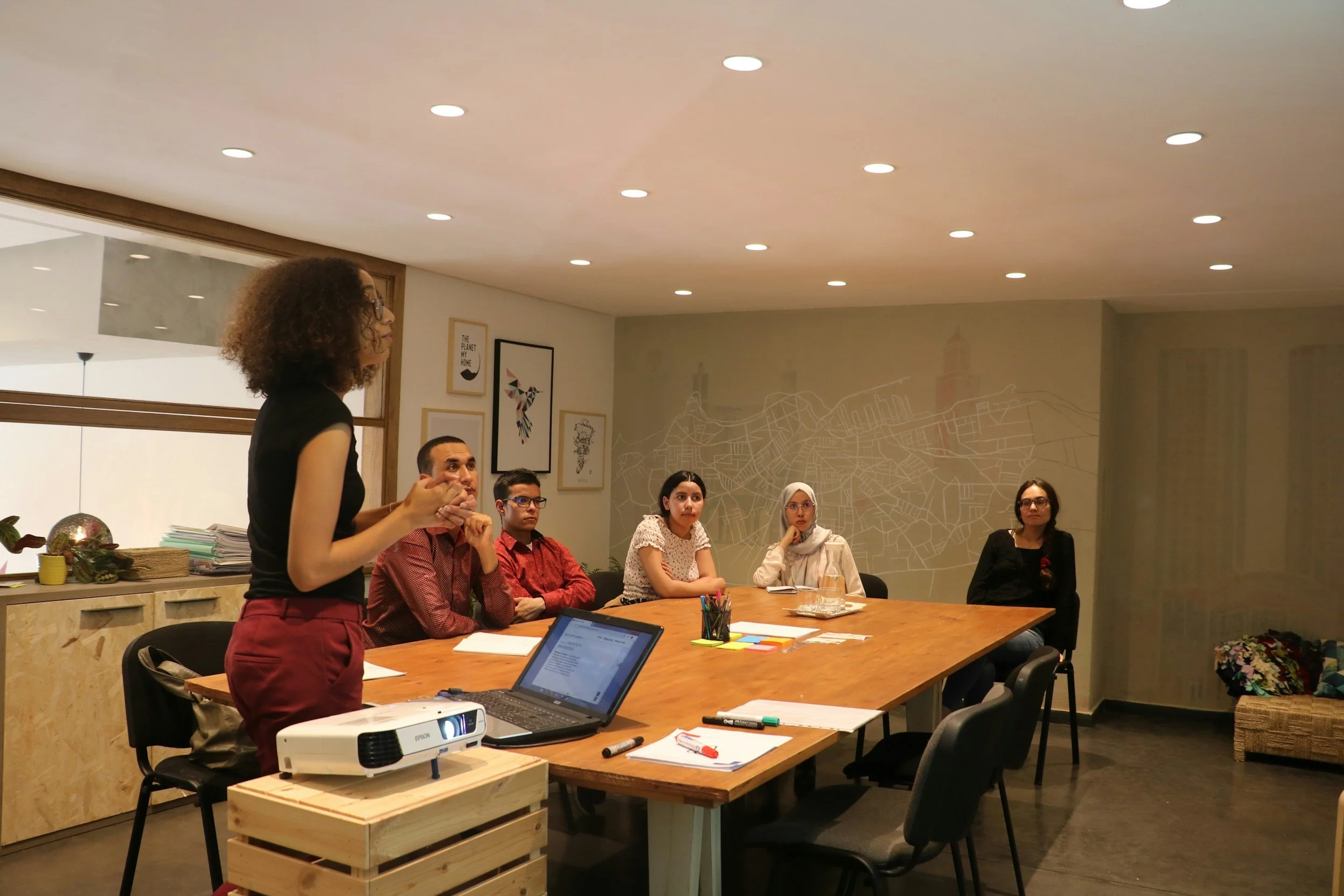
![A woman standing and speaking during a meeting in a conference room, with five seated individuals listening, some taking notes, in a modern office space with artwork on walls and a projector on a wooden stand.]()
Learning Culture
I believe creating a strong learning culture is essential to building an agile, innovative, and future-ready organization. Throughout my career, I’ve worked to embed continuous learning into the business, not as a standalone HR initiative, but as a core part of how organizations grow, adapt, and remain competitive.
My approach focuses on creating environments where employees are encouraged to expand their skills, share knowledge, embrace new technologies, and continuously improve. This includes leadership development, mentorship, coaching, cross-functional learning opportunities, and providing employees with the tools and resources needed to evolve alongside the business. In rapidly changing environments, especially those driven by technology and AI transformation, organizations that prioritize learning are far better positioned to adapt and scale successfully.
I’ve partnered with leadership teams to build development strategies that align employee growth with organizational priorities, helping teams strengthen capabilities while improving engagement, retention, and performance. I believe employees are most engaged when they feel they are growing, contributing, and preparing for what’s next in their careers.
A true learning culture creates more than just skill development. It fosters curiosity, accountability, innovation, and resilience across the organization. By making learning part of the culture and everyday experience, organizations create stronger leaders, more adaptable teams, and a workforce that is prepared to navigate change and drive long-term success.
-
![Two men in business attire sitting on a black sofa, looking at a laptop with a marble-like cover, smiling and laughing, in a modern office with large windows showing a cityscape.]()
People Technology
I have extensive experience leading the selection, implementation, optimization, and transformation of Human Capital Management and HRIS platforms to support both operational efficiency and broader business strategy. Throughout my career, I’ve partnered with executive leadership, IT, payroll, finance, and operations teams to ensure people systems are not only technically sound, but scalable, user-friendly, and aligned with organizational goals.
My experience spans the full lifecycle of HCMS implementations, from needs assessment and RFP development through vendor evaluation, implementation, change management, testing, training, and post-go-live optimization. I’ve worked with and implemented leading platforms across payroll, benefits, recruiting, onboarding, performance management, compensation, analytics, time and attendance, and workforce planning.
I view people systems as far more than administrative tools. When implemented effectively, they create operational efficiencies, improve data integrity, strengthen compliance, enhance the employee experience, and provide leaders with the workforce insights needed to make informed business decisions. Strong systems also create the infrastructure necessary to scale organizations, support organizational transformation, and improve cross-functional collaboration.
In addition to implementation experience, I’ve led system optimization and process redesign initiatives in complex and fast-paced environments, helping organizations streamline workflows, improve reporting capabilities, and better leverage analytics to support talent and business strategy. My approach balances strategy with execution, ensuring systems drive measurable business value while remaining practical and sustainable for the teams using them every day.
-
![A forest scene with two dirt paths splitting, surrounded by trees with yellow and green leaves.]()
Career and Job Architecture
I view job architecture as a foundational element of organizational effectiveness and long-term business strategy. A well-designed framework creates clarity around roles, responsibilities, career progression, and organizational structure, helping ensure the workforce is aligned to the company’s operational and strategic priorities.
Throughout my career, I’ve partnered with leadership teams to build and refine job architecture frameworks that support growth, scalability, workforce planning, compensation strategy, and talent development. This includes defining job families, leveling structures, reporting relationships, competencies, and career pathways that create consistency across the organization while still allowing flexibility as the business evolves.
Strong job architecture improves far more than organizational charts. It creates transparency for employees around expectations and growth opportunities, strengthens recruiting and succession planning efforts, supports equitable compensation practices, and enables more effective performance management and talent assessment. It also gives leadership better visibility into organizational capability gaps and future workforce needs.
In fast-growing and transformational environments, job architecture becomes especially important because it provides the structure needed to scale effectively while maintaining alignment and accountability. My approach is always grounded in balancing business needs with employee experience, ensuring organizations build frameworks that are practical, scalable, and supportive of both operational success and long-term talent strategy.
-
![Two women in polka dot blouses sitting at a gray table reviewing and taking notes on papers and a notepad, in an office setting.]()
Regulatory Compliance and Risk Mitigation
I approach compliance and risk mitigation as critical business functions that protect the organization while also strengthening culture, trust, and operational stability. Throughout my career, I’ve partnered with executive leadership to navigate complex employee relations matters, organizational restructuring, multi-state employment compliance, workplace investigations, leave management, wage and hour issues, performance management, reductions in force, and evolving regulatory requirements.
My philosophy is that strong compliance practices should not create unnecessary bureaucracy. Instead, they should provide clear frameworks that help organizations operate responsibly, make sound decisions, and reduce risk while still supporting business agility and growth. I focus on building practical, scalable processes that ensure consistency, fairness, transparency, and alignment with organizational values.
I’ve led organizations through periods of significant change and understand the importance of balancing legal compliance with thoughtful communication and a strong employee experience. This includes partnering closely with legal counsel, operations, finance, and leadership teams to proactively identify risks, strengthen policies and procedures, improve documentation practices, and ensure managers are equipped to handle sensitive employee matters effectively.
Beyond legal protection, I believe strong compliance and employee relations practices contribute directly to organizational health. Employees are more engaged and productive when they trust leadership, understand expectations, and feel they are being treated fairly and consistently. Creating that balance between compliance, accountability, and humanity has been a consistent focus throughout my career.
-
![]()
Diversity and Inclusion
I believe diversity, inclusion, and belonging are essential to building strong, innovative, and high-performing organizations. Throughout my career, I’ve worked to create workplace cultures where employees from different backgrounds, experiences, and perspectives feel respected, supported, and empowered to contribute meaningfully to the business.
My approach is grounded in the understanding that inclusive organizations make better decisions, adapt more effectively to change, and are better positioned to serve diverse customers, markets, and communities. I’ve partnered with leadership teams to embed inclusion into talent acquisition, employee development, leadership practices, organizational culture, and broader people strategies, ensuring these efforts are aligned with business objectives rather than treated as standalone initiatives.
I also believe inclusion is reflected in everyday employee experiences, from how organizations communicate and develop talent to how leaders manage performance, navigate employee relations, and create opportunities for growth. Building inclusive cultures requires intentional leadership, accountability, transparency, and a commitment to ensuring employees feel heard, valued, and treated fairly.
In increasingly competitive and rapidly evolving business environments, organizations that prioritize inclusion are often more successful in attracting and retaining talent, strengthening collaboration, fostering innovation, and driving long-term organizational performance. My focus has always been on helping organizations create cultures where people and businesses can grow together successfully.
-
![]()
AI Adoption & Usage
I believe AI adoption is rapidly becoming a critical component of business strategy, workforce transformation, and long-term organizational competitiveness. Throughout my career, I’ve worked with leadership teams to drive technology adoption and organizational change initiatives that improve efficiency, scalability, decision-making, and overall business performance. More recently, this has included helping organizations integrate AI into both operational workflows and day-to-day employee productivity.
My approach to AI adoption is grounded in balancing innovation with practicality. Successful AI transformation is not simply about implementing tools. It requires building a culture that embraces continuous learning, adaptability, accountability, and curiosity. I focus on helping leaders and employees understand how AI can enhance decision-making, automate repetitive tasks, improve speed and accuracy, and allow teams to focus more on strategic and high-value work.
I’ve partnered across departments to support AI-enabled workflow transformation, organizational redesign, and evolving performance expectations in fast-paced environments. This includes developing adoption frameworks, establishing measurable expectations for usage and proficiency, supporting change management efforts, and ensuring leaders are equipped to coach teams through evolving ways of working. I also recognize that AI adoption often requires organizations to rethink roles, skill requirements, performance management, and workforce planning as technology continues to reshape how work gets done.
I believe organizations that successfully embrace AI will create significant competitive advantages through increased agility, productivity, innovation, and scalability. At the same time, sustainable adoption requires thoughtful leadership, clear communication, strong governance, and an ongoing investment in employee development. My focus has been on helping organizations navigate that balance in a way that drives business results while preparing employees and leaders for the future of work.